Building Habits That Last
January 12, 2026
Marry Me Chicken
February 20, 2026Building Habits That Last
January 12, 2026Marry Me Chicken
February 20, 2026
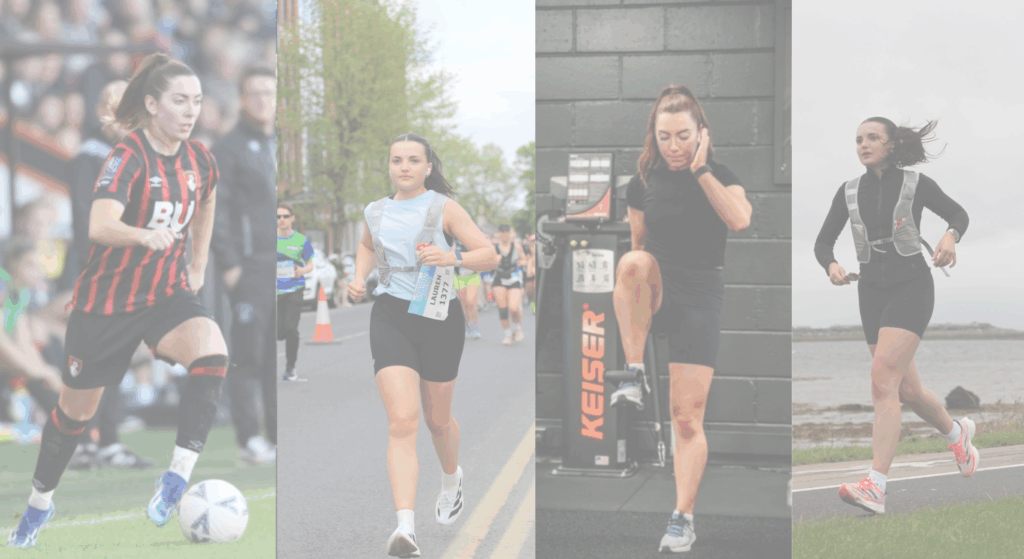
For many female athletes, iron status quietly influences how strong, energetic, and consistent training feels. When iron is low, it doesn’t always show up as something obvious, but it often shows up in how hard certain efforts feel (Alaunyte et al., 2015; Solberg & Reikvam, 2023).
So what actually is iron?
Iron’s main job is to help carry oxygen in the blood and get it into your muscles so they can produce energy. It’s a key part of haemoglobin in red blood cells and myoglobin in muscle cells. When iron is low, that whole system becomes less efficient, which means exercise feels harder for the same effort (Solberg & Reikvam, 2023).
To put it in simple terms, oxygen is the fuel, and iron is the delivery van. You can have plenty of fuel available, but if the delivery system isn’t working properly, your muscles don’t get what they need when they need it. That’s when training starts to feel heavier than it should.
Female athletes are more likely to run low on iron than males for a few reasons. Research shows this is because iron losses add up from multiple places at once. Menstrual blood loss is one factor, but iron is also lost through sweat, small amounts of gut bleeding during hard training, and the repeated breakdown of red blood cells that happens with impact sports like running. Over time, those losses can quietly outpace intake, especially during heavy training blocks (Alaunyte et al., 2015; Solberg & Reikvam, 2023).
One of the most important things to understand is that low iron doesn’t always mean anemia. Iron stores usually drop first, which shows up as low ferritin, while haemoglobin can stay in the “normal” range. This means blood tests might look reassuring, but the athlete still feels off. This low iron, non anaemic state is common in active women and can still affect energy levels, concentration, and training quality (Alaunyte et al., 2015; Solberg & Reikvam, 2023).
In real life, this often shows up in subtle ways. A runner might notice that easy runs feel harder than usual, heart rate is higher at usual paces, or intervals feel much tougher compared to normal. A team sport athlete might feel flat in sessions, struggle to hit repeat high efforts, or need longer to recover between games. Some other symptoms can look like experiencing brain fog, low motivation, frequent colds, or just feeling “not themselves or off form,” even though training and nutrition haven’t changed in any dramatic ways. These symptoms can occur even without anemia because iron is also involved in energy producing enzymes and muscle metabolism, not just oxygen transport (Solberg & Reikvam, 2023).
More recent research looking at iron and performance shows that improving iron status tends to make the biggest difference in athletes who are genuinely low to begin with. This shows us that correcting a real deficiency matters. Giving extra iron to someone who already has adequate stores is far less likely to improve performance and should be approached carefully (Solberg & Reikvam, 2023).
Food plays a big role here. Iron comes in two main forms. Iron from animal foods like red meat, poultry, and fish is absorbed more easily. Iron from plant foods like lentils, beans, wholegrains, tofu, and leafy greens is still valuable, but absorption depends heavily on what else is eaten at the same time. Vitamin C helps pull iron into the body, while things like tea and coffee can inhibit absorption if they’re had with meals (Alaunyte et al., 2015).
A practical example might be a female athlete who eats well overall but avoids red meat and often has coffee with meals. Her training volume increases, but her iron intake and absorption aren’t where they should be. Over a few months, iron stores drop, those symptoms of sessions feeling harder, and recovery slowing down start to be felt. Nothing dramatic has changed, but performance stalls (Alaunyte et al., 2015). (If you do feel these symptoms it is important you visit your GP and get appropriate guidance) Some small changes that can move things in the right direction could be a breakfast with toast, scrambled egg and spinach and swap the coffee for a glass of orange juice. This way, there is iron in the spinach and the vitamin C from the orange juice is supporting the absorption.
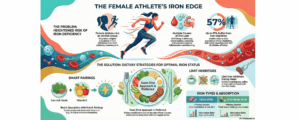
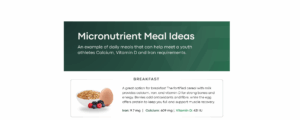
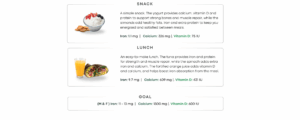
The visual below shows an example of how simple daily meal choices can be structured to support key micronutrients like iron, alongside calcium and vitamin D. It’s not a perfect template or a one size fits all plan, but a visual way of showing how small decisions across the day can add up to better iron support.
Another example could be a busy female athlete who’s unintentionally under fuelled. Low energy intake has been shown to interfere with iron regulation after training, making it harder to absorb and recycle iron during heavy training periods (Solberg & Reikvam, 2023).
The key message is that iron isn’t about chasing numbers or automatically reaching for supplements. It’s about awareness on what it is, where we get it and why its so important. For female athletes, iron is foundational. When iron stores are supported, training feels more consistent, recovery improves, and the body can actually express the fitness being built (Alaunyte et al., 2015; Solberg & Reikvam, 2023).
Feeling flat or inconsistent in training often reflects a mismatch between the load you’re placing on your body and the support it’s receiving. When recovery isn’t where it should be and sessions start to feel harder than expected, iron status can be one contributing factor, but it’s usually just a small part of a much bigger picture. Energy availability, training structure, recovery practices, and overall health all play a role in how well performance is expressed.
This is where our support matters. We work with you to identify what’s holding you back and to strengthen the foundations that underpin good performance, so your next step forward doesn’t feel uncertain, but feels achievable.
References
Alaunyte, I., Stojceska, V., & Plunkett, A. (2015). Iron and the female athlete: A review of dietary treatment methods for improving iron status and exercise performance. Journal of the International Society of Sports Nutrition, 12, 38. https://doi.org/10.1186/s12970-015-0099-2
Solberg, A., & Reikvam, H. (2023). Iron status and physical performance in athletes. Life, 13(10), 2007. https://doi.org/10.3390/life13102007